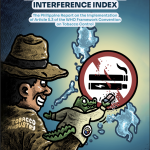
2025 TOBACCO INDUSTRY INTERFERENCE INDEX
October 30, 2025
Stop the influence: Health advocates insist on a tobacco-free gov’t
November 6, 2025

Twenty years ago, I found myself in a negotiation room half a world away, representing the Philippines in talks that would change the course of public health. It was the early 2000s, long before the word “vape” entered our vocabulary. It felt almost strange to be there. I wasn’t a doctor or scientist, but a lawyer serving as an Undersecretary of Health, navigating an unfamiliar but deeply consequential space where law and health converged.
We were negotiating the World Health Organization Framework Convention on Tobacco Control (WHO FCTC), or what would become the world’s first public health treaty devoted to protecting people from tobacco. It was not a typical diplomatic exercise. It was a fight to save lives, especially those of the young.
My generation grew up seeing tobacco everywhere, on television, in movies, on billboards, and on buses. The cowboy in cigarette ads, strong, rugged, free, became the image of aspiration for young men. Cycling fans remember athletes in red jerseys racing through towns around the country, cheered on by locals with banners carrying a cigarette brand. It was clever marketing with a very simple message: if you wanted to be adventurous, to be cool, to belong, you had to smoke.
Back then we didn’t yet know that behind every “cool” image was disease, addiction, and death. By the time the FCTC came along, the toll was clear. Tobacco was not just a health issue; it was a governance issue, a development issue.
The FCTC called for measures that, at the time, felt revolutionary: ban on tobacco advertising, raise taxes on tobacco products, make public places smoke-free, warn consumers with graphic health warnings. These were not mere policies, but shields for future generations.
I still remember the sense of pride when the Philippines ratified the FCTC in 2005. We became part of a global movement that declared: health must come first.
We have come far since then. Cities like Baguio, Balanga, Iloilo, and Davao have pioneered smoke-free ordinances. The Sin Tax reforms helped fund universal health care. Cigarette packs now carry graphic warnings that tell the truth about the harms they cause.
But victories in public health are never permanent.
In recent years, new forms of nicotine addiction have emerged, vapes, e-cigarettes, pouches, and other novel tobacco products, are aggressively promoted as “safer” or “cleaner.” Once again, the target market is the young.
These products come in flavors that entice the youth, sold with barely any restrictions online and in stores near schools. The same playbook is being used, only this time, the cowboy has been replaced by influencers.
The passage of Republic Act No. 11900, which transferred the regulation of vapes from the Food and Drug Administration (FDA) to the Department of Trade and Industry (DTI) and lowered the minimum age of access from 21 to 18 years old, felt like déjà vu. Once again, health was being traded for commerce.
Our youth deserve better. Lawmakers must act decisively to halt the alarming rise in smoking and vaping among the young. They must restore the regulation of vapes and all nicotine products to the FDA, where it rightfully belongs, because public health cannot be dictated by trade priorities. The age of access should be raised back to 21, or even higher, given the scientific evidence that nicotine interferes with brain development well into early adulthood. Flavors that appeal to children and youth must be banned.
This November, the Eleventh Conference of Parties (COP11) to the WHO FCTC will convene to assess global progress and reaffirm commitments. It is critical that the Department of Health lead the COP11 Philippine delegation, not the trade or agriculture sector, not the diplomats, because the FCTC is a health treaty.
These are not radical demands, but logical next steps for a nation that once stood proud as an early champion of tobacco control.
The FCTC was not just a treaty. It was, and remains, a promise. A promise that we, as a nation, will protect our people from harm. A promise that the next generation will be freer than the last.
Health policies are not monuments but rather living commitments that must be renewed by every generation, lest they crumble under the weight of profit and neglect. Every time I see a young person puffing on a vape, I am reminded that the work we began more than 20 years ago is far from over. Our promise to protect them lives on and so must our resolve.
Two decades ago, I helped negotiate that promise. Today, alongside countless advocates, we must continue to honor the commitment we made to defend the health of the Filipino people, so that each of us may live fully, breathe freely, and grow old in good health. And when the next 20 years have passed, I hope we can proudly say we stood our ground and kept our word.
Atty. Alexander Padilla served as Undersecretary of the Department of Health and was part of the Philippine delegation that negotiated the WHO Framework Convention on Tobacco Control. A lawyer and long-time public health advocate, he sits on the Board of Trustees of HealthJustice and continues to champion policies that protect the health and rights of Filipinos.Fatima Laperal is the Executive Director of HealthJustice Philippines